Kids & Contacts: The New Generation of Lens Wearers
Calgary Optometry Centre addresses contact lens issues, questions & news:
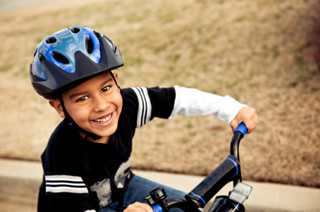 When is my child old enough to wear contact lenses? Am I old enough to start wearing contact lenses? How do we determine the right age for children and contact lenses? These are some of the common questions asked by parents and young patients about contact lens wear, but the answers are not that simple.
Related story: Children’s Vision
There are several factors that should be considered in determining the right time for contact lenses. In any case, every child or teen needs to be considered as an individual.
Maturity and Patience
All ten-year-olds or all fifteen-year-olds are not the same. Some demonstrate maturity beyond their years. When talking to the child and their parents, accurate insight about a child's maturity can be determined.
Initial contact lens fitting and adaptation also requires a degree of patience. Inserting and removing contact lenses, adjusting to having lenses in the eyes and lens care procedures need to be properly performed, and may take longer for some young patients to learn. A patient attitude will reduce the risk of discouragement and/or anger.
Generally, the more mature and patient the child, the more likely he/she will be a successful and compliant contact lens wearer. In some cases, we have been informed by some parents that the contact lens wearing experience has helped in their child's maturity and patience development. In our practice, children have been fit with contact lenses by age 9.
Parental Guidance
Parental support for their child wearing contact lenses is imperative for success. Parents should be educated about what to expect from contact lenses and help their child cope with any problems that may arise in the initial fitting and adaptation stages.
Motivation
Why contact lenses are being considered and would lenses be better than glasses? Common reasons for wanting contact lenses include:
- Non-compliance with glasses. Getting a child to wear glasses can be difficult. Children often resist and glasses may get lost or broken.
- Self-esteem and self-confidence. Teenagers especially are sensitive about their appearance. Providing children needing vision correction with contact lenses may improve self-esteem and self-confidence.
- Sports and recreational activities. Keen eyesight for sports and recreation is just as important as strength, speed and agility. The better your vision, the better your performance. Contact lenses for sports would mean not having to deal with glasses that slide down, inhibit peripheral vision, are knocked off or fog over. Children may even remove their glasses, which reduces performance even further.
Getting Started
After determining that a child is ready for contact lenses, has parental support and that a need can be fulfilled, your child's eye doctor will discuss the next stage to get contact lenses in your child's eyes.
- Eye Health. Contact lens wear for children, as for adults, carries some risks. Maintaining eye health will be the most important factor from beginning to end. Generally, childrens' eyes are healthier than their parents. For example, how many children have dry eyes? Virtually none. All education and procedures taught will be directed towards complication free contact lens wear.
- Lens choices. The doctor will discuss which lenses may be best for eye health, vision, comfort, handling and convenience.
- Trial fitting. Lenses will be inserted into your child's eyes to assess vision and fit, and your child will assess vision and comfort levels.
- Instruction. Instruction in insertion and removal of lenses, lens care procedures and lens wearing guidelines will be presented to get your child started.
- Trial Period. This is when your child will start wearing contact lenses in the "real world"-the classroom, ski hill, dance studio, etc. Your child will be asked to assess the lens performance during a one to two week period.
- Follow-up care. Your child's doctor will re-assess the contact lenses after the initial trial period and inquire about any concerns that the child or parents may have. Vision, lens fit, and eye health will be re-assessed. Any adjustments for clinical reason or from patient concern will be implemented and a further follow-up appointment will be scheduled.
Age by itself is usually not a limiting factor for wearing contact lenses. As we have discussed, looking at factors such as a child's personality, parental influence and motivation will help decide if your child is ready for contact lenses. In getting started with contact lenses, our doctors have found that children and teens adapt quickly to the lenses and the responsibilities that are associated with lens wear.
With a carefully informed and planned approach to kids and contact lenses, our satisfaction is knowing that we are able to help a child see better and feel better. Please talk to your Calgary Optometry Centre optometrist for more information.

General information
More Than Just Eye Examinations
Dominica...Working Beyond Borders
Eye Health
Blepharitis-Common Eye Condition
Optical Coherence Tomography (OCT)
Vision
Children's Vision: Back to School
General information
Why Choose Calgary Optometry Centre
Glasses information
Selecting Eyewear for your Face
Lens information
Understanding Your Optometrist's Lens Recommendations
Sunglasses-Protecting your Eyes from Harm
Transitions Lenses…Right in any Light
Seecoat…A New Standard for Anti-Reflective (AR) and Scratch Resistance (SR) Lens Coating
General information
Help for Contact Lens "Dropouts"
Types of Lenses
Soft Contact Lenses: Not All the Same
Daily Disposable Contact Lenses for Spring...even in Colours
Vision