What Does 20/20 Vision Mean?
20/20 vision is the well-known term used to describe perfect vision. This measurement of visual acuity can be used to grade vision with and without glasses, meaning that every patient could have two different visual acuity measurements.
20/20 vision originated from scientific research that determined the normal, healthy human eye should be able to see two lines that are separated by 1.75 millimeters from 20 feet away. Some patients can see this without any correction, while many need correction to achieve 20/20 visual acuity. More commonly, 20/20 vision means that you can see the same size letter from 20 feet away that other normal people can see (also from 20 feet away).
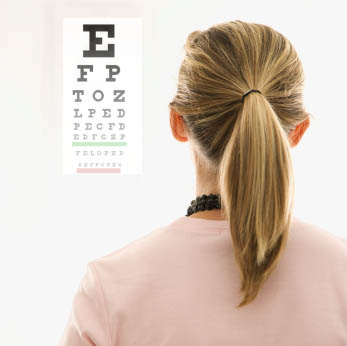
Visual acuity is measured using an eye chart in the Optometrists office. Most patients are familiar with 20/20 vision being the bottom line of the eye chart. The letters in the lines above are usually larger in size and indicate you have less than 20/20 vision.
For example, if you have 20/80 vision, this means that what a normal person can see from 80 feet away, you would have to move to 20 feet to see the same thing. For those who need glasses or contact lenses, 20/80 means that what you see from 80 feet away with your correction, you need to move up to 20 feet when you remove your correction. Some people are able to have better than 20/20 vision. 20/15 vision means that what a normal person can see from 15 feet away, you can move back to 20 feet to see the same thing.
Other commonly heard of vision measurements:
20/50=visual acuity needed to legally drive (standard class 5 license in Alberta)-with or without correction
20/200=legally blind, even with the best correction available

General information
More Than Just Eye Examinations
Dominica...Working Beyond Borders
Eye Health
Blepharitis-Common Eye Condition
Optical Coherence Tomography (OCT)
Vision
Children's Vision: Back to School
General information
Why Choose Calgary Optometry Centre
Glasses information
Selecting Eyewear for your Face
Lens information
Understanding Your Optometrist's Lens Recommendations
Sunglasses-Protecting your Eyes from Harm
Transitions Lenses…Right in any Light
Seecoat…A New Standard for Anti-Reflective (AR) and Scratch Resistance (SR) Lens Coating
General information
Help for Contact Lens "Dropouts"
Types of Lenses
Soft Contact Lenses: Not All the Same
Daily Disposable Contact Lenses for Spring...even in Colours
Vision