Vision Through the Ages
During a patient's vision and eye health exam, our Optometrists often get questions about other family members' eyes and vision. This spans all age groups from babies to older parents, and depending on your own age, the family members could be your children, parents, grandchildren, brothers/sisters, nieces/nephews, etc. Locate the age group that applies to your family members, or read all the sections to know it all!
Infants
At birth, a baby is able to see blurred patterns of light and dark. During the next four months, vision becomes clearer, colour vision starts to develop and the eyes start to work together as a team. From 4-6 months, he or she should begin to follow moving objects and to reach out towards close objects. This indicates the normal development of eye movement, eye-hand coordination and depth perception.
Our Optometrists recommend that babies have their first eye examination between 6-9 months old. During this exam, our doctors will ensure that vision, eye health and eye alignment /movement are all normal. Another common problem for infants is a complete or partial tear duct blockage, which causes various degrees of watery eyes. Mild to serious eye conditions can be identified from this first exam which can be treated or monitored to prevent permanent damage to vision or eye health.
Toddler to Pre-school (age 2-5 years)
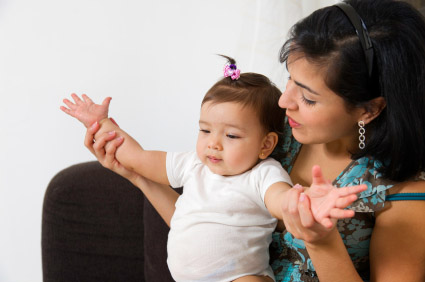 At this stage come various levels of pulling him or herself up, crawling and finally walking. Watch to see if the child is using both eyes to look ahead and scan the area in front of them. He or she should be going in straight lines and able to avoid objects in front of them and adjust for changes in heights (stairs, etc.). Again, any problems in these areas may indicate an eye problem.
Any conditions from infancy that have not been treated or corrected may require more intense treatment at this stage. For example, crossed or lazy eyes may be treated by a combination of eye patching, glasses, vision exercises or surgery to straighten the eye. Surgery can also be done if a tear duct does not open up on its own.
The eye examination at age three usually represents the first formal exam. At this age, a child can more accurately describe their vision and eye health. Many are able to identify pictures, letters and/or numbers to get a measurement of their vision.
School Age (age 6-19 years)
80% of learning depends on vision. Parents want their children to do well at school, so this is definitely the stage to make sure that a child's vision and eye health are at their best. Children often do not tell you they can't see. Read more about what parents and teachers should look for to indicate a child may have a vision problem.
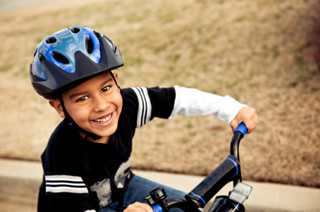 Eye infection, eye injuries and eye allergies also tend to be a common problem because so many children are together in small areas. If you suspect any eye infection or injury, our Optometrists are able to treat by writing prescriptions for medicated eye drops.
Yearly eye exams are recommended during the school years because vision changes can occur rapidly as children grow. Vision changes are also more likely to occur if one or both parents have vision correction. Children are less likely to complain of vision problems because they may not be aware of anything wrong and haven't experienced high level vision demands.
Early Adult Years (age 20-45 years)
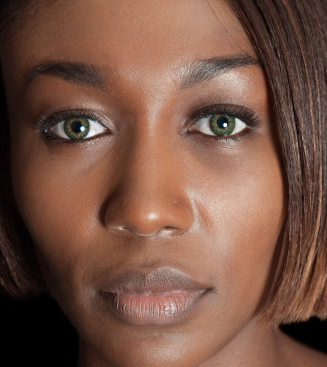 Vision begins to stabilize at this stage. If you need vision correction, the prescription numbers usually settle between 25-30 years old. If you are interested in vision correction procedures, this is the time it can be considered. This is usually the period where much of your vision occurs in the workplace-including lengthy periods of computer use.
Computer vision places great stress on the eyes. Many of you have experienced sore and dry eyes, headaches, blurred vision, neck and back pains that result from staring at a computer screen. One simple way to reduce computer vision problems is to follow the 20-20-20 rule:
 For every 20 minutes looking at the screen, take a 20 second break and look 20 feet away.
Our Optometrists strongly recommend the use of special computer glasses to reduce eye and neck strain.
This is also the age group to look at maintaining eye health as you move into the later adult years and senior years. The major topics are nutrition to maintain eye health and ultraviolet radiation protection for the eyes.
Depending on factors such as family history, individual eye health and vision correction, eye exams are recommended every 1-2 years.
Late Adult Years (age 45-64 years)
 Noticeable vision changes begin to occur. Presbyopia is the condition where the eyes begin to lose focus strength and speed. The most common symptoms are having to hold reading materials further away, need for increased lighting at near and harder to read fine print. Eventually, different prescriptions are required for distance and near work.
With the onset of Presbyopia, intermediate vision is also affected, and with individual differences in screen size, viewing distance and viewing angles, specific computer glasses can be of great benefit at this time.
There is also the greater risk for eye diseases such as glaucoma and possibly the beginning of cataracts.
Many in this age group have prescription medications from your family doctor for various health conditions. Some of these health conditions have effects on vision and eye health. The medications themselves can also have unwanted side effects on the eyes.
Eye exams are recommended every 1-2 years depending on the same factors mentioned in the early adult years stage.
Senior Years (age 65 years and over)
Like every other part of your body, the eyes change as they get older. There will be more noticeable blurred vision (requiring glasses more often to see clearly) and increased risks for eye disease.
 Our Optometrists promote a proactive approach to maintaining vision and eye health at this stage of life. Most importantly, annual eye examination is recommended-due to the increased risk of age related eye disease and general health conditions and medications that can affect the eye.
The most common and potentially troubling eye conditions that develop with age are cataracts, macular degeneration and glaucoma. While each of these conditions can cause permanent blindness, loss of vision can be prevented with early detection and appropriate treatment.
Lifestyle changes will also help to get the most out of the eyes. Follow these tips on vision and aging to maintain vision and eye health and delay effects of aging on the eyes.

General information
More Than Just Eye Examinations
Dominica...Working Beyond Borders
Eye Health
Blepharitis-Common Eye Condition
Optical Coherence Tomography (OCT)
Vision
Children's Vision: Back to School
General information
Why Choose Calgary Optometry Centre
Glasses information
Selecting Eyewear for your Face
Lens information
Understanding Your Optometrist's Lens Recommendations
Sunglasses-Protecting your Eyes from Harm
Transitions Lenses…Right in any Light
Seecoat…A New Standard for Anti-Reflective (AR) and Scratch Resistance (SR) Lens Coating
General information
Help for Contact Lens "Dropouts"
Types of Lenses
Soft Contact Lenses: Not All the Same
Daily Disposable Contact Lenses for Spring...even in Colours
Vision