Night Driving
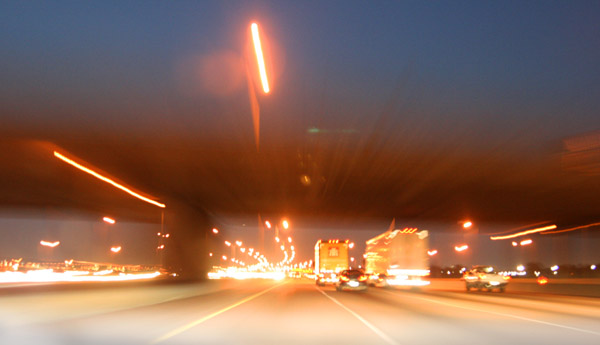
"My vision seems fine during the day, but I seem to have problems when driving at night. Why is it so much harder to see at night?"
Our doctors hear this comment quite often. Some people are so bothered by night vision problems that they avoid night driving altogether. We would like to help you understand and possibly improve your night driving abilities.
Even under the ideal conditions, driving is a complex task. Clear and comfortable vision is necessary since a large percentage of driving decisions are based on what is seen.
Factors that affect clear and comfortable night vision include:
Proper Prescription Glasses and Contact Lenses
The most common cause of poor night vision is an improper prescription. Patients may need an update to their existing lenses or, a pair of glasses for the first time. In many cases, the proper correction solves the patient's concerns about night driving.
Eye Health
Some ocular conditions, such as cataracts, cause a decrease in vision. This is especially noticeable at night. Other eye health problems contribute to "night blindness" creating difficulty in any low-light situation. A thorough and regular eye examination is necessary to detect potential eye health problems.
Glare
Headlights, tail lights and street lights create glare which can make night driving more difficult. Glare is a distracting problem that may cause the driver to lose sight of the road. Our optometrists recommend an anti-glare coating on your glasses to reduce glare and provide more comfortable night-time vision.
Visual Cues and Depth (Distance) Perception
Another common complaint with night driving is that is it harder to judge distances. During the day, the surroundings provide many clues to help with distance perception. These clues make us feel more secure about speed and braking distances. At night, however, the environment is much less visible creating an almost black field of view that offers no information for accurate distance judgments. Other than adjusting driving speed, there is no solution to this problem.
Level of Alertness and Speed
The faster your speed, the less reaction time you have. With objects already more difficult to see because of reduced lights, adjustment to lower speeds is necessary. Avoid driving when you feel fatigued and take breaks during long trips.
Headlights, Mirrors and Windshields
Headlights that are dirty or improperly aligned do a poor job of lighting the road. Damaged, pitted or dirty mirrors and windshields may also obstruct, distort and reduce what is seen outside your vehicle. Keep your headlights, windows and mirrors clean and ensure that windshield wiper blades are working efficiently. Replace cracked or pitted windshields and check the alignment of your headlights. All of these will increase your driving comfort at night.
In conclusion, there are multiple factors that affect your overall comfort and security during night driving. Start with a visit a visit to your optometrist to make sure spectacle and contact lens prescriptions are up to date, eye health is normal, and ask for a demonstration on anti-glare lenses.

General information
More Than Just Eye Examinations
Dominica...Working Beyond Borders
Eye Health
Blepharitis-Common Eye Condition
Optical Coherence Tomography (OCT)
Vision
Children's Vision: Back to School
General information
Why Choose Calgary Optometry Centre
Glasses information
Selecting Eyewear for your Face
Lens information
Understanding Your Optometrist's Lens Recommendations
Sunglasses-Protecting your Eyes from Harm
Transitions Lenses…Right in any Light
Seecoat…A New Standard for Anti-Reflective (AR) and Scratch Resistance (SR) Lens Coating
General information
Help for Contact Lens "Dropouts"
Types of Lenses
Soft Contact Lenses: Not All the Same
Daily Disposable Contact Lenses for Spring...even in Colours
Vision