Infant Eye Examinations
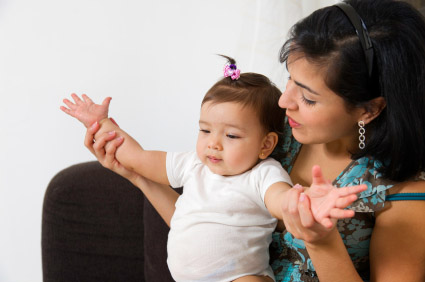
For an infant, vision is one of the most important senses. In the first few months of life, the process of "seeing to learn and learning to see" is already occurring. Visual skills such as focusing, tracking, depth perception and eye-hand coordination are all being developed. The Canadian Association of Optometrists recommends an eye exam by six months of age or even earlier if necessary.
Watch your baby for any clues that may indicate vision or eye health problems. Some of these clues include:
- An eye that turns in or out.
- Excessive eye rubbing.
- Excessive eye tearing or discharge.
- Not tracking even slow moving objects
- Not reaching out to objects within arm's length
The main purpose for an infant eye examination is to make sure that eye health and vision is normal so the infant's visual skills have a chance to develop properly. Our optometrists will test for:
- Excessive or unequal amounts of nearsightedness, farsightedness or astigmatism.
- Eye alignment and tracking ability
- Eye health
This testing can be done reliably without any reading ability or verbal response from your baby. Early detection of any problems allow for earlier treatment so the vision development process can continue on schedule.
What you can do to help in a baby's vision development:
- Talk to your baby as your walk around the room.
- Hang a mobile on the baby's crib.
- Keep "reachable and touchable" toys within the baby's arm and focusing length.
- Occasionally change the baby's surroundings.
So, don't forget about your infant's eyes. Contact one of our offices to schedule your baby's first eye exam. For added convenience, we can forward the necessary paperwork to you prior to the appointment so that it can be filled out at home and brought in on the day of the exam.

General information
More Than Just Eye Examinations
Dominica...Working Beyond Borders
Eye Health
Blepharitis-Common Eye Condition
Optical Coherence Tomography (OCT)
Vision
Children's Vision: Back to School
General information
Why Choose Calgary Optometry Centre
Glasses information
Selecting Eyewear for your Face
Lens information
Understanding Your Optometrist's Lens Recommendations
Sunglasses-Protecting your Eyes from Harm
Transitions Lenses…Right in any Light
Seecoat…A New Standard for Anti-Reflective (AR) and Scratch Resistance (SR) Lens Coating
General information
Help for Contact Lens "Dropouts"
Types of Lenses
Soft Contact Lenses: Not All the Same
Daily Disposable Contact Lenses for Spring...even in Colours
Vision